
Ever since Britain chose to leave the European Union, its economy has taken a consistent pummeling. Brexit, the COVID-19 pandemic and a steady stream of subsequent cost-of-living crises have transformed the once prosperous country into a lumbering, underachieving low-growth economy.
This essentially makes every single political problem that we encounter much harder to deal with than it really ought to be. London is, of course, the primary engine of the UK economy, responsible for roughly a quarter of the country’s GDP and income tax revenues. Our other cities, meanwhile, are lagging behind their European counterparts.
Turning these cities around would be a massive step forward for the UK’s economic woes. If Manchester, Liverpool, and Birmingham were as productive as Milan, Lyon, and Munich, we would actually be in a stronger position than we were before Brexit.
Local governments and metropolitan mayors have been pushing the narrative that public transport is the miracle cure for our seemingly terminal economic illness, but I’m not convinced.
What Can Public Transport Do?
If the preachers are to be believed, then the main reason that our cities aren’t performing as well economically is that our public transport infrastructure is seriously lacking in comparison to our international competitors.
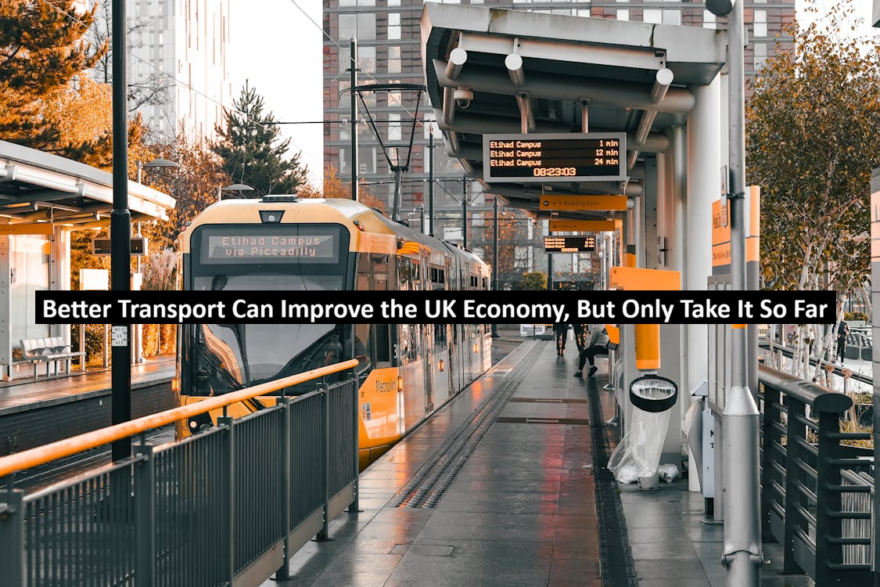
That’s mostly true. Munich has its own underground, suburban rail, tram and bus networks that connect the entire city, linking millions of workers to the offices and retail districts in the city centre from residential areas that lie further out of town. Meanwhile, Manchester has arguably one of the best public transport systems in the UK, with its own army of buses, trams, and trains, yet it still manages to lag behind in comparison.
This shouldn’t be the case, because – in theory – better transport means maximising the number of jobs that each worker can reach, whether they work for a major bank or own their own garage door repair business, with a higher number of businesses competing for a higher number of customers altogether. If a city is big enough, then we need to move these people around quickly.
Read: How Clinic Management Software Improves Appointment Scheduling Efficiency
So, Where Are We Going Wrong?
The obvious place to begin is cost. And not just of tickets themselves, but the pricetag that comes with developing new transport networks altogether. In Europe, on average, it costs £42 million for a single mile of new tramline. But, in the UK? £87 million. That’s one reason why, while every French city has a tramline, only a quarter of the UK’s cities have one. This is often because, in the UK, when we’re building a tramline and need to remove the utilities in the way, like cables and pipes. This obviously costs more money. In Europe, this bill is split evenly between the utility company and the organisation building the tram. But in the UK, almost all of it can fall on the transport company.
On top of that, the tickets themselves are more expensive in the UK than they are anywhere in Europe. The average single bus ticket in the UK, for example, is almost three times higher than it would be in Rome, and twice as expensive as the equivalent in Paris.
But Why Isn’t Transport the Answer?
Even if we waved a magic wand and lowered the construction costs and ticket prices, I don’t necessarily think that it would restore Britain to its former glory.
First of all, let’s take a look at Marseille. Its a beautiful French city, with a public transport system that is far superior to any of its UK neighbours. Yet, it’s still less productive. Makes you think.
What’s more, let’s turn back time for a second. Manchester, Liverpool, and Leeds all waved goodbye to their own public tram networks in the forties and fifties. The result? Well, not a whole lot. They didn’t fall behind their European peers at the time, nor did growth or productivity lag.
The truth of it comes back to the Iron Lady herself. Ever since the UK’s core cities were stripped of their manufacturing capacity during the Thatcher era, they’ve never been able to fill the void and replace it with anything. In the years since, these cities have limped on, attempting to adapt to an increasingly globalised world economy where they’ll always be a step behind – well, until they find something to fill that void.
Closing Thoughts
Economics is a complicated subject. While public transport is generally a net positive for almost any economy, it might not give UK cities the boost they need to keep up with their European rivals. There’s naturally an awful lot of nuance involved with a topic; different cities to look at, each with its own suite of strengths and weaknesses to factor in, as well as historical context.
For those who love their cars, it’s popular to drive part of the way, then continue with public transport, like parking at Haywards Heath Station for those who work in London. Lord knows the UK has plenty of issues that it’s currently in the throes of tackling head-on, so perhaps it won’t hurt to modernise its transport infrastructure where needed.
